Notice: Function _load_textdomain_just_in_time was called incorrectly. Translation loading for the acf domain was triggered too early. This is usually an indicator for some code in the plugin or theme running too early. Translations should be loaded at the init action or later. Please see Debugging in WordPress for more information. (This message was added in version 6.7.0.) in /var/www/lifepanel.eu/wp-includes/functions.php on line 6131
Deprecated: Creation of dynamic property ACF::$fields is deprecated in /var/www/lifepanel.eu/wp-content/plugins/advanced-custom-fields-pro/includes/fields.php on line 138
Deprecated: Creation of dynamic property acf_loop::$loops is deprecated in /var/www/lifepanel.eu/wp-content/plugins/advanced-custom-fields-pro/includes/loop.php on line 28
Deprecated: Creation of dynamic property ACF::$loop is deprecated in /var/www/lifepanel.eu/wp-content/plugins/advanced-custom-fields-pro/includes/loop.php on line 269
Deprecated: Creation of dynamic property ACF::$revisions is deprecated in /var/www/lifepanel.eu/wp-content/plugins/advanced-custom-fields-pro/includes/revisions.php on line 397
Deprecated: Creation of dynamic property acf_validation::$errors is deprecated in /var/www/lifepanel.eu/wp-content/plugins/advanced-custom-fields-pro/includes/validation.php on line 28
Deprecated: Creation of dynamic property ACF::$validation is deprecated in /var/www/lifepanel.eu/wp-content/plugins/advanced-custom-fields-pro/includes/validation.php on line 214
Deprecated: Creation of dynamic property acf_form_customizer::$preview_values is deprecated in /var/www/lifepanel.eu/wp-content/plugins/advanced-custom-fields-pro/includes/forms/form-customizer.php on line 28
Deprecated: Creation of dynamic property acf_form_customizer::$preview_fields is deprecated in /var/www/lifepanel.eu/wp-content/plugins/advanced-custom-fields-pro/includes/forms/form-customizer.php on line 29
Deprecated: Creation of dynamic property acf_form_customizer::$preview_errors is deprecated in /var/www/lifepanel.eu/wp-content/plugins/advanced-custom-fields-pro/includes/forms/form-customizer.php on line 30
Deprecated: Creation of dynamic property ACF::$form_front is deprecated in /var/www/lifepanel.eu/wp-content/plugins/advanced-custom-fields-pro/includes/forms/form-front.php on line 598
Deprecated: Creation of dynamic property acf_form_widget::$preview_values is deprecated in /var/www/lifepanel.eu/wp-content/plugins/advanced-custom-fields-pro/includes/forms/form-widget.php on line 34
Deprecated: Creation of dynamic property acf_form_widget::$preview_reference is deprecated in /var/www/lifepanel.eu/wp-content/plugins/advanced-custom-fields-pro/includes/forms/form-widget.php on line 35
Deprecated: Creation of dynamic property acf_form_widget::$preview_errors is deprecated in /var/www/lifepanel.eu/wp-content/plugins/advanced-custom-fields-pro/includes/forms/form-widget.php on line 36
Deprecated: Creation of dynamic property acf_plugin_ohio::$settings is deprecated in /var/www/lifepanel.eu/wp-content/plugins/ohio-extra/acf_ext/acf-fields.php on line 12
Notice: Function _load_textdomain_just_in_time was called incorrectly. Translation loading for the ohio domain was triggered too early. This is usually an indicator for some code in the plugin or theme running too early. Translations should be loaded at the init action or later. Please see Debugging in WordPress for more information. (This message was added in version 6.7.0.) in /var/www/lifepanel.eu/wp-includes/functions.php on line 6131
Deprecated: Creation of dynamic property acf_field_oembed::$width is deprecated in /var/www/lifepanel.eu/wp-content/plugins/advanced-custom-fields-pro/includes/fields/class-acf-field-oembed.php on line 31
Deprecated: Creation of dynamic property acf_field_oembed::$height is deprecated in /var/www/lifepanel.eu/wp-content/plugins/advanced-custom-fields-pro/includes/fields/class-acf-field-oembed.php on line 32
Deprecated: Creation of dynamic property acf_field_google_map::$default_values is deprecated in /var/www/lifepanel.eu/wp-content/plugins/advanced-custom-fields-pro/includes/fields/class-acf-field-google-map.php on line 33
Deprecated: Creation of dynamic property acf_field__group::$have_rows is deprecated in /var/www/lifepanel.eu/wp-content/plugins/advanced-custom-fields-pro/includes/fields/class-acf-field-group.php on line 31
Deprecated: Creation of dynamic property acf_field_clone::$cloning is deprecated in /var/www/lifepanel.eu/wp-content/plugins/advanced-custom-fields-pro/pro/fields/class-acf-field-clone.php on line 34
Deprecated: Creation of dynamic property acf_field_clone::$have_rows is deprecated in /var/www/lifepanel.eu/wp-content/plugins/advanced-custom-fields-pro/pro/fields/class-acf-field-clone.php on line 35
Deprecated: Creation of dynamic property acf_field_ohio_typo::$settings is deprecated in /var/www/lifepanel.eu/wp-content/plugins/ohio-extra/acf_ext/fields/acf-ohio-typo-field.php on line 58
Deprecated: Creation of dynamic property acf_field_ohio_sizes::$settings is deprecated in /var/www/lifepanel.eu/wp-content/plugins/ohio-extra/acf_ext/fields/acf-ohio-sizes-field.php on line 41
Deprecated: Creation of dynamic property acf_field_ohio_color::$settings is deprecated in /var/www/lifepanel.eu/wp-content/plugins/ohio-extra/acf_ext/fields/acf-ohio-color-field.php on line 40
Deprecated: Creation of dynamic property acf_field_ohio_columns::$settings is deprecated in /var/www/lifepanel.eu/wp-content/plugins/ohio-extra/acf_ext/fields/acf-ohio-columns-field.php on line 39
Deprecated: Creation of dynamic property acf_field_ohio_ecommerce_columns::$settings is deprecated in /var/www/lifepanel.eu/wp-content/plugins/ohio-extra/acf_ext/fields/acf-ohio-ecommerce-columns-field.php on line 39
Deprecated: Creation of dynamic property acf_field_ohio_responsive_height::$settings is deprecated in /var/www/lifepanel.eu/wp-content/plugins/ohio-extra/acf_ext/fields/acf-ohio-responsive-height-field.php on line 40
Deprecated: Creation of dynamic property acf_field_ohio_code::$settings is deprecated in /var/www/lifepanel.eu/wp-content/plugins/ohio-extra/acf_ext/fields/acf-ohio-code-field.php on line 40
Deprecated: Creation of dynamic property ohio_acf_field_image_option::$settings is deprecated in /var/www/lifepanel.eu/wp-content/plugins/ohio-extra/acf_ext/fields/acf-ohio-image-option-field.php on line 21
Warning: Cannot modify header information - headers already sent by (output started at /var/www/lifepanel.eu/wp-includes/functions.php:6131) in /var/www/lifepanel.eu/wp-includes/feed-rss2.php on line 8 sampling – Lifepanel
https://lifepanel.eu
Europe's largest Probability PanelWed, 26 Jun 2024 08:20:59 +0000en-US
hourly
1 https://lifepanel.eu/wp-content/uploads/2022/07/android-chrome-256x256-1-150x150.pngsampling – Lifepanel
https://lifepanel.eu
3232Demographics Skews in Probability Panels
https://lifepanel.eu/demographics-skews-in-probability-panels/
Tue, 25 Jun 2024 05:39:51 +0000https://lifepanel.eu/?p=231993Deprecated: preg_split(): Passing null to parameter #2 ($subject) of type string is deprecated in /var/www/lifepanel.eu/wp-includes/formatting.php on line 3501
]]>
Probability Panels are not perfect and nor is Lifepanel. In this article we will be looking at some of the demographic skews that occur within probability panels at the different stage from recruitment to survey data collection. Next to that we share some of the approaches we have used at Lifepanel to improve our panel demographics.
TL;DR:
Online Probability Panels are not perfect but come with their on sets of skews and limitations
Due to the online nature aspects like education, age, gender can be skewed as part of the recruitment process.
Within online probability panels it is possible to account for these skews using weighting.
1. What are probability panels
Online probability panels like Lifepanel are a valuable tool in market research. These panels consist of a group of individuals who have been carefully selected to represent the target population. The selection process ensures that each panel member has a known and non-zero probability of being chosen to participate in surveys and studies. This method provides researchers with a more accurate representation of the general population, allowing for more reliable data and insights. Online probability panels are often used to gather information on consumer preferences, opinions, and behaviours, making them an essential resource for businesses and organisations seeking to make informed decisions.
2.Importance of accurate representation of demographics in probability panels
The accurate representation of demographics in probability panels is of utmost importance for several reasons. Firstly, it ensures that the sample used for research or surveys is representative of the population being studied. This is crucial as it allows for the generalisation of findings to the larger population. Without accurate representation, the results may be biassed and not reflect the true characteristics and behaviours of the population.
Secondly, accurate representation of demographics helps in identifying disparities and inequalities within different groups. By including diverse demographics in probability panels like Lifepanel, researchers can analyse the data to understand if certain groups are being underrepresented or marginalised. This information is vital for policymakers and organisations to address social issues and implement targeted interventions.
Furthermore, accurate representation of demographics in probability panels promotes inclusivity and fairness. It ensures that all individuals have an equal chance of being selected for research or surveys, regardless of their background or characteristics. This helps to eliminate biases and prejudices that may arise from excluding certain groups from participation.
Lastly, accurate representation of demographics in probability panels enhances the validity and reliability of research findings. When a sample is representative of the population, the results can be confidently generalised. This increases the credibility of the research and allows for more accurate decision-making based on the findings.
Probability-based panels like Lifepanel allow respondents to take a finite amount of interviews per month, in the case of Lifepanel the maximum survey is just one per month. This allows respondents to have a higher attention during the survey as survey fatigue is reduced significantly, ultimately yielding higher quality data even with lower sample sizes.
3,Understanding Panel Demographics and the Impact of Errors
Panel demographics, such as age, gender, education, occupation, urbanicity, and income, are crucial factors in survey research. They provide valuable insights into the characteristics of a population and help researchers draw meaningful conclusions. However, when conducting surveys using probability panels, several errors can impact these demographics. Two significant sources of error are coverage error and non-response error. Additionally, internet access limitations can further complicate the accuracy of panel demographics (coverage error).
Skews due to coverage errors
Coverage error refers to the discrepancy between the target population and the actual population covered by the survey. It occurs when certain segments of the population are not included or are underrepresented in the panel. This error can have a significant impact on panel demographics. For example, if a survey is conducted using online panels, individuals without internet access will be excluded from the sample. This exclusion can lead to biassed results, especially if those without internet access differ systematically from those with access.
For the case of Lifepanel, coverage error can occur due to part of the population not having access to a phone or not having internet access.
Skews due to non-response
Non-response error occurs when selected individuals choose not to participate in the survey or fail to respond to survey requests. Within probability panels, the first part of recruitment for the panel before an actual survey comes with non-response error as well.
Non-response error in probability panels:
Not responding to the recruitment survey.
Not completing the profile for demographics and accepting the privacy policy.
Non completing a survey upon invitation within the panel.
Within probability-panels the overall response is usually lower compared to an ad-hoc CATI or F2F survey as it includes the non-recruits, non-profiled and the non completes of a survey.
This error can also affect panel demographics. For instance, if younger individuals are more likely to ignore or decline survey invitations, it may result in an overrepresentation of older age groups in the panel. Similarly, if certain occupations or education levels are less likely to respond, it can lead to a skewed representation of these demographics.
4.The impact of skews within the panel on data quality
In this section the consequences of demographic skews and ways to address them are discussed.
Consequences of demographic skews in probability panels
Inaccurate representation of population characteristics
Panels overall while designed to be representative, can suffer from selection bias where certain segments of the population are underrepresented or overrepresented. For example, younger individuals, ethnic minorities, or lower-income groups might be less likely to participate in such panels due to access issues or lack of interest. It is therefore crucial for researchers to acknowledge these limitations and work towards improving recruitment strategies and panel diversity to ensure more accurate and inclusive data collection. At Lifepanel we therefore screen for secondary languages and browser language to also include part of the population that is not fluent in the native language.
Biassed estimates and conclusions and Reduced generalizability
As a result, the findings derived from these panels may not truly reflect the diverse opinions, behaviours, and experiences of the entire population. This skew can lead to erroneous conclusions and misguided policy decisions that do not adequately address the needs of all societal groups. The collected data can then not be generalised for the entire population.
Importance of addressing demographic skews for data quality improvement
Both coverage error and non-response error can have a compounding effect on panel demographics. If certain demographic groups are more likely to experience coverage error or non-response error, their representation in the panel may be significantly distorted. This distortion can limit the generalizability of survey findings and compromise the accuracy of conclusions drawn from the data.
Internet access limitations further exacerbate these issues. While online panels offer convenience and cost-effectiveness, they inherently exclude individuals without internet access or with limited digital literacy. This exclusion can disproportionately affect certain demographic groups, such as older adults or individuals from low-income backgrounds who may have limited access to technology. Consequently, panel demographics may not accurately reflect the broader population, leading to biassed results and potentially misleading conclusions.
In conclusion, panel demographics play a vital role in survey research, providing valuable insights into the characteristics of a population. However, errors such as coverage error and non-response error can distort these demographics in probability panels. Internet access limitations further compound these issues. To ensure accurate and representative results, researchers must be aware of these challenges and employ appropriate strategies to mitigate biases and improve the quality of panel demographics.
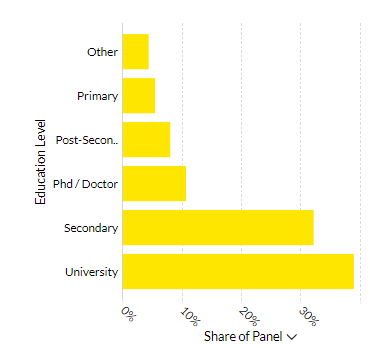
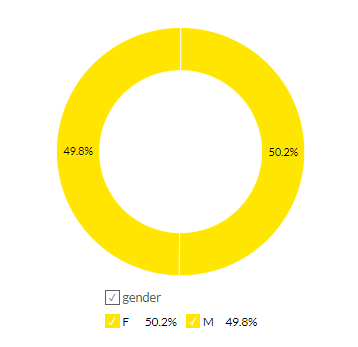
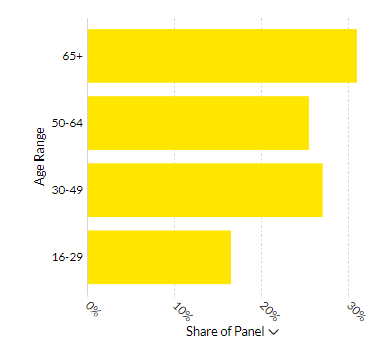
Differences in Demographics due to Recruitment-Bias: The case of Sweden
Figure 1: Recruitment Skews for Lifepanel Sweden
5.Demographics that can be skewed in probability panels and the reasons for that
Panel demographics such as age, income, gender, education, occupation, and rural/urban level are impacted by non-response error and non-coverage error in the following ways: – Non-response error occurs when individuals selected for the panel do not participate or provide incomplete responses. This can lead to a biassed representation of panel demographics.
Education demographics
Education demographics may be biassed if individuals with certain educational backgrounds are more likely to decline participation or provide incomplete responses. In the case of Lifepanel, lower education segments are underrepresented. The reasons for that could be twofold: The first one being that lower educated people are less likely to respond to surveys which can be seen in CATI surveys as well, secondly that respondents over-state their education level.
Occupation demographics
– Occupation demographics can be impacted by non-response error if individuals in specific occupations are less willing to participate or fail to provide complete occupational information.
Rural/Urban level demographics
Rural/urban level demographics may be affected if individuals from rural or urban areas are more likely to refuse participation or not fully disclose their location. Coverage levels for internet penetration, telephone or SIM card ownership might differ among rural and urban areas. In Western Europe this should be less likely of an issue.
Age Demographics
Age demographics can be affected by non-coverage error if certain age groups are underrepresented in the panel due to sampling limitations. Regarding probability panels like Lifepanel, this might be due to response pattern (eg. response rates among 18-29 seems to be lower compared to other age groups). On the other hand, enrolment into a panel requires some basic technical knowledge which might not be available for the highest age bands among all members. Lifepanel in these cases tries to ensure that the enrolment process is as smooth as possible. Also using SMS and WhatsApp as additional pre-notification and reminder ensures higher response rates among the younger age segment due to multiple attempts.
Income Demographics
Income demographics may be biassed if individuals with higher or lower incomes are less likely to be included in the panel sample.
Gender Demographics
Gender demographics can be influenced by non-coverage error if certain gender groups are underrepresented in the panel due to sampling limitations.
6. Mitigation strategies Lifepanel uses due to ensure maximum coverage and reduction of demographic biases?
To mitigate these issues, researchers must employ various strategies. First, efforts should be made to ensure a diverse and representative sample by using multiple recruitment methods and oversampling underrepresented groups. Secondly, researchers should employ weighting techniques to adjust for coverage and non-response biases. These techniques aim to make the panel demographics align more closely with the target population. Additionally, researchers should explore alternative modes of data collection, such as telephone or mail surveys, to reach individuals without internet access.
Sampling techniques to reduce coverage skew
Several sampling techniques can be applied to mitigate the coverage skews in probability panels.
Oversampling underrepresented groups
Oversampling underrepresented groups is a critical sampling technique employed to mitigate coverage skews in probability panels. By intentionally increasing the proportion of certain segments of the population that might otherwise be underrepresented due to smaller sizes or lower response rates, researchers can ensure that these groups’ opinions and behaviours are accurately reflected in survey results. This technique not only enhances the representativeness of the sample but also allows for more precise subgroup analyses. Without oversampling, there’s a risk that the insights derived from a study may be biassed, failing to capture the true diversity and nuances of the broader population. Underrepresented groups in probability panels can be segments with lower education level as overall recruitment and completion rate is lower for these but as well as younger panel members. In the case of Lifepanel, the need to oversample younger panel members is not necessary as the interaction of SMS and WhatsApp yields higher recruitment and completion rates for these compared to generic CATI interviewing.
Utilising auxiliary data for adjustment
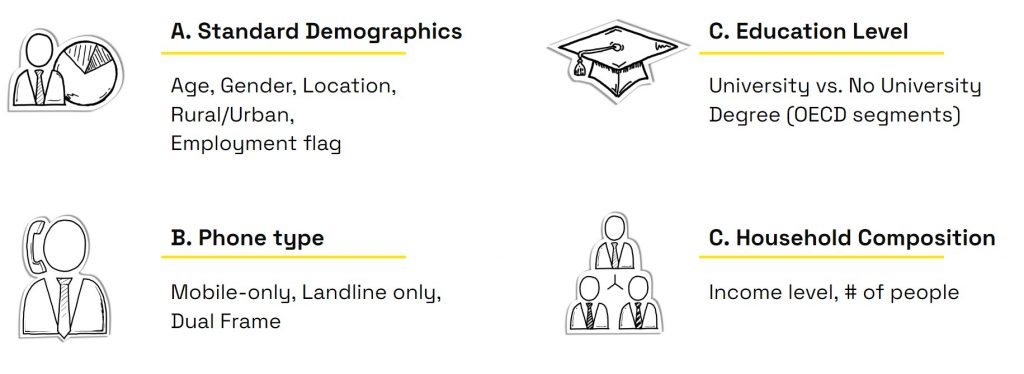
By incorporating auxiliary information, such as demographic and geographic data from census records or administrative databases, researchers can adjust their weighting schemes to better reflect the overall population. This process, known as post-stratification, involves aligning the sample distribution with known population margins across various strata. Additionally, techniques like propensity score matching can be used to adjust for differences between the panel and the target population based on observed characteristics. This ensures that the final survey results are more accurate and reduces the bias introduced by uneven coverage, leading to more reliable and generalizable findings. For Lifepanel, all data can be delivered in unweighted or weighted format. It needs to be considered that weighting increases the Design Effect and subsequently leads to a smaller net effective sample size.
Strategies to minimise non-response skew
Implementing effective panel recruitment design and administration techniques
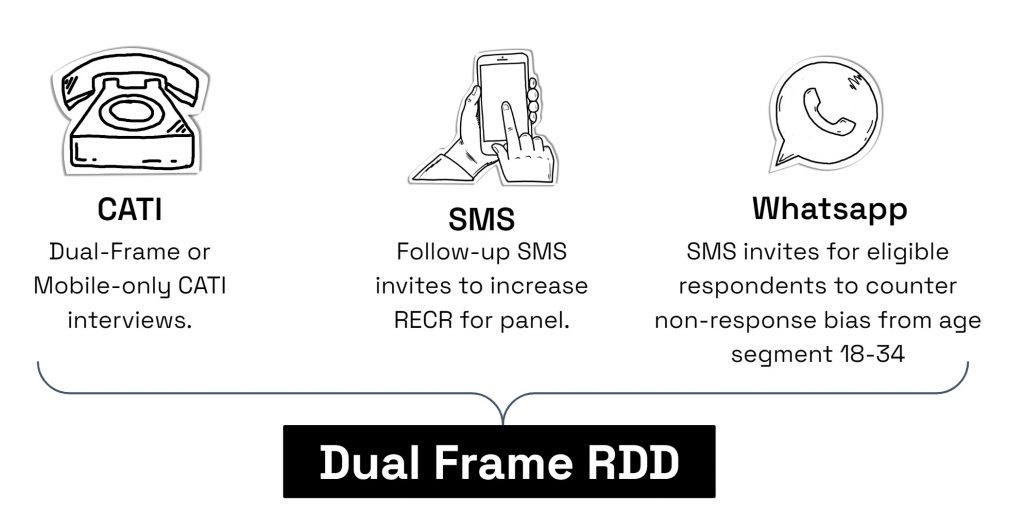
In order to minimise overall non-response skew in probability panels, it is important to look at the recruitment part of the panel, the competition part and lastly the completion rate. Each of these different elements require different ways to reduce the overall non-response rate. First, employing stratified sampling methods ensures the panel is representative of the population, with several follow-up messages to increase recruitment rate and thus lower recruitment bias for the panel. Second, multiple recruitment channels should be used, which in the case of Lifepanel consists of phone numbers that are recruited via landline CATI, Mobile CATI, SMS and Whatsapp to ensure different population segments get recruited. . Third, the initial recruitment should be followed by effective panel maintenance strategies such as regular communication, engagement activities, and incentives tailored to the panelists’ preferences and motivations. Fourth, providing a user-friendly interface for survey completion can reduce barriers to participation. Fifth, monitoring response rates closely and conducting follow-ups with non-respondents through personalised reminders or alternative contact methods can help address potential biases early on. Additionally at Lifepanel panel members are engaged by receiving feedback on the collected surveys and links to news articles. Lastly an attractive incentive system with clear monetary incentives or donations rather than a credit system is used.
Utilising weighting techniques to adjust for non-response bias
When certain segments of the population are less likely to respond to surveys, the results can become unrepresentative of the overall population. To correct this, researchers apply weights to the responses based on the inverse probability of a person responding. This means that if a particular group is underrepresented among respondents, each response from that group will count more in the final analysis. By doing so, the weighted data more accurately reflects the demographics and opinions of the entire target population. This process, known as post-stratification weighting, involves aligning survey samples with known population characteristics such as age, gender, and education level. When done correctly, weighting can significantly reduce the non-response bias, leading to more reliable and valid survey results. At Lifepanel the option is provided to deliver the datasets in weighted and non-weighted data.
7. Conclusion
Recap of demographic skews in probability panels due to coverage and non-response
Demographic skews in probability panels are due to the various non-response patterns as part of the recruitment, profiling and surveying of the target population. On top of that there are challenges with keeping a probability panel engaged.
Importance of addressing these skews for accurate and reliable research findings
When deciding on how to sample your target audience it is important to look at the various sampling challenges and ask how a panel provider addresses these skews. Asking overall on panel demographics from recruitment, ways of recruitment and how the panel is managed can help to reduce the impact on the collected data. At Lifepanel, full transparency is provided when it comes to demographics at the recruitment stage, how the sampling frame is composed but also what is the completion rate. Going a step further it is possible for researchers to get access of the demographics of the non-completes to account for that using post-stratification methods.
]]>Lifepanel Omnibus Surveys: Reliable Quarterly data
https://lifepanel.eu/omnibus-surveys-a-reliable-quarterly-data/
Tue, 27 Feb 2024 14:50:29 +0000https://lifepanel.eu/?p=228323Omnibus surveys are a type of research method that gathers data from multiple participants on a wide range of topics. These surveys are typically conducted by research firms or agencies and aim to provide a comprehensive snapshot of public opinion or behavior. The term “omnibus” refers to the inclusion of various questions or topics within a single survey, making it a efficient way to collect data on multiple subjects. Omnibus surveys often use random sampling techniques to ensure a representative sample of the target population. The collected data is then analyzed and used by businesses, organizations, and policymakers to make informed decisions, develop marketing strategies, or gain insights into public sentiment. Overall, omnibus surveys offer a valuable tool for obtaining diverse and timely information on a broad range of subjects.
The Importance of Omnibus Surveys in the Research Industry
Omnibus surveys play a crucial role in social research due to their ability to capture a wide range of information from a diverse sample of respondents. These surveys are designed to collect data on various topics, such as politics, policy research and public opinion, all in a single questionnaire. This comprehensive approach allows researchers to gather valuable insights and make informed decisions based on the collected data. Aditionally, the regularity of omnibus surveys allows for trend analysis and tracking changes in attitudes and behaviors over time. By providing a snapshot of society at a given moment, omnibus surveys contribute to our understanding of social dynamics and help shape evidence-based policies and interventions. The importance of omnibus surveys in social research cannot be overstated as they provide a valuable tool for gathering comprehensive data, analyzing trends, and informing decision-making processes.
Methodology of Omnibus Surveys
Omnibus surveys are widely used in market research as they are designed to collect data from respondents, covering a wide range of topics and research objectives. One key aspect of the methodology is the use of a standardized questionnaire that is administered to all respondents. The questionnaire typically includes both closed-ended and open-ended questions, allowing for quantitative and qualitative analysis.
Another important feature of omnibus surveys is the use of random sampling techniques to select respondents. This helps to ensure that the sample is representative of the target population and reduces the potential for bias in the results. Participants may be freshly recruited for each survey or may be part of an established panel.
In terms of data collection, omnibus surveys can be conducted through various methods, including telephone interviews, face-to-face interviews, or online surveys. The choice of method depends on factors such as cost, time constraints, and the nature of the target population. Lifepanel offers an online Omnibus solution, the go-to choice for gathering quantitative data.
The switch to digital not only ensures real-time data but also offers speedy responses and high-quality solutions. Overall, the methodology of omnibus surveys provides a robust and efficient approach to collecting data for research purposes. It allows researchers to gather information on a wide range of topics while ensuring the reliability and representativeness of the findings.
Advantages of Omnibus Surveys for Social Research
Omnibus surveys offer numerous advantages for social research. Firstly, they provide a great solution for gathering data from a large and diverse sample for clients that only need to answer a few questions but expect the same methodological rigor as stand-alone survey. By combining multiple research questions from different clients into a single survey, the overhead of data collection and administration can be shared among participants, making it easier to access for researchers. Additionally, omnibus surveys allow for quick turnaround times, as they are conducted on a regular basis with pre-determined fieldwork schedules. This enables researchers to obtain timely data and make informed decisions in a shorter period. Furthermore, these surveys provide a wealth of information on various topics, allowing researchers to explore multiple research questions simultaneously. The comprehensive nature of omnibus surveys ensures that a wide range of data is collected, providing valuable insights into different aspects. Lastly, the large sample sizes associated with omnibus surveys enhance the statistical power of the findings, increasing the generalizability of the results to the target population. Overall, omnibus surveys offer an efficient and effective method for conducting social research, enabling researchers to gather reliable data and gain valuable insights into various societal issues.
At Lifepanel, we collect background information on the respondent, covering standard demographics. The selection is made at random from Lifepanel’s panel, which consists of active and unique members.
Omnibus surveys are usefuwhen you need to ask the same set of questions repeatedly in order to make comparisons. This approach makes omnibus surveys a effective solution for gathering data and obtaining valuable insights without the burden of conducting a full-scale survey independently.
With Lifepanel, we provide nationally representative samples from our established panel, limiting participants to one survey per month, for which participants receive proper incentives, to overcome the mentioned limitations.
Applications for Omnibus Surveys in Social Research
Omnibus surveys have become an invaluable tool in social research due to their versatility and efficiency. These surveys are designed to collect a wide range of data from a diverse sample of participants, making them ideal for studying various social phenomena. One of the key applications of omnibus surveys is in measuring public opinion and attitudes towards different issues. By including questions on a variety of topics, researchers can gain insights into the beliefs and perspectives of the general population.
Additionally, omnibus surveys are often used to track trends over time, allowing researchers to observe how opinions change and evolve. Overall, the applications of omnibus surveys in social research are vast and continue to expand as new technologies and methodologies emerge. Whether your goal is to collect information on a variety of topics, or to track attitudes on migration, voting behavior, or gain data insights on a specific demographic view on a given topic, our omnibus solution is here for you.
How can we Help You with Omnibus Survey?
Both of our branches Sample Solutions and Lifepanel are dedicated to providing probability samples. With Sample Solutions, we offer high-coverage random-digit dialed telephone samples for survey researchers to conduct Omnibus surveys.
Lifepanel Omnibus is designed to efficiently gather data on a wide range of topics. By utilizing our established panel, we can ensure that the samples we provide are nationally representative, which means that the data collected accurately reflects the opinions of the population as a whole. In contrast, CATI Omnibus may not guarantee such representation, as potentially biasing the sample towards certain demographics and declining response rates as well.
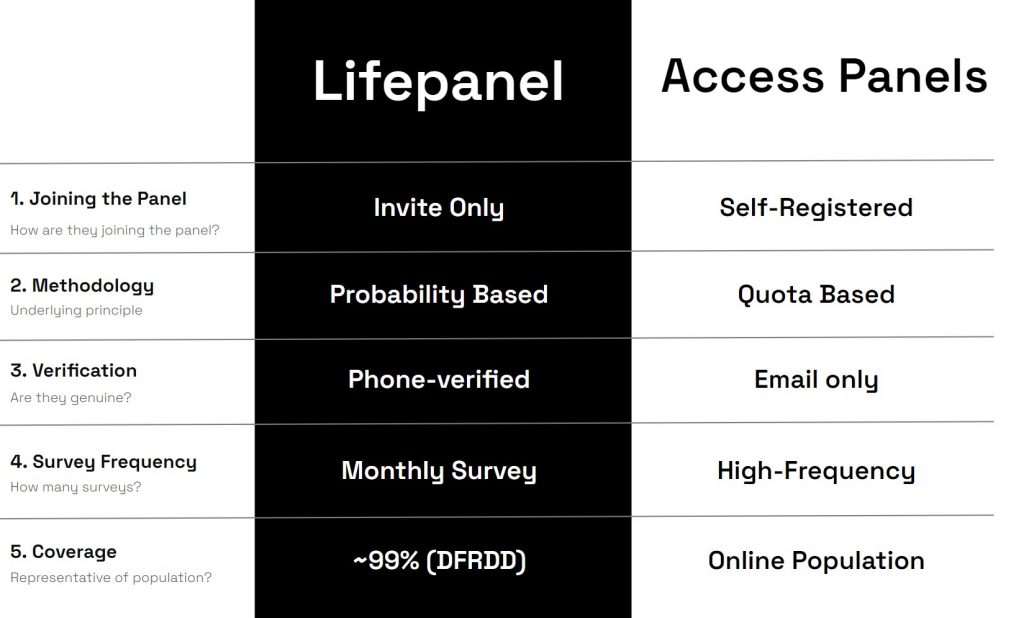
To maintain the integrity of the data, we limit participants to one survey per month, allowing for a balanced representation of voices. Our recruitment process is by invitation only, ensuring that panelists are carefully selected and motivated to contribute their thoughts and feedback, which is not the case with access panels. With Lifepanel Omnibus, you can access reliable data quickly , empowering your organization with the information needed to make informed decisions. While CATI Omnibus may also provide reliable data, it may not emphasize speed as much, as they are constrained by time limits, as interviewers must keep calls brief to maintain respondent interest and cooperation.
Overall, the Lifepanel Omnibus offers a comprehensive and efficient solution for gathering nationally representative data on various topics, while ensuring participant balance and motivation.
Conclusion
Omnibus insights into social trends surveys provide a snapshot and attitudes of public opinion and can help identify trends and patterns in society. The data collected can be used to inform policy decisions, evaluate the effectiveness of social programs, and guide marketing strategies.
Overall, omnibus surveys are a valuable tool for social research, providing researchers with efficient way to collect data on a wide range of topics. When used appropriately and in conjunction with other research methods, they can provide valuable insights into societal attitudes, behaviors, and trends.
]]>Best approaches for maximizing the recruitment rate in online panels
https://lifepanel.eu/__recruitment-rate/
Tue, 30 Jan 2024 08:20:03 +0000https://lifepanel.eu/?p=228252Online surveys are a method of data collection that involves the use of the Internet to gather feedback, opinions, or information from respondents. This approach to surveying has become increasingly popular due to its convenience, speed, and representativeness. Unlike traditional surveys that might involve paper questionnaires or face-to-face interviews, online surveys can reach a wider audience in a shorter amount of time.
Moreover, online surveys can be easily customized to target specific demographics. However, it is important for these surveys to be designed carefully to avoid biases and ensure the validity and reliability of the results. Ensuring the validity and reliability of online survey results requires careful attention to survey design, question formulation, and the selection of the target population.
Recruitment rate– How many numbers were contacted during the recruitment stage and how many of them agreed to participate.
The recruitment rate in research is crucial in ensuring the quality and validity of the panel. A good recruitment strategy not only ensures that the sample size is met but also that it is representative of the population under study. Conversely, low or biased recruitment can lead to skewed data, limiting the reliability and applicability of the research outcomes.
Recruitment strategies
Pretesting with in-depth interviews and focus groups
To inform the design, tone and content of the approach to recruitment and communications materials, in-depth interviews and focus groups could be conducted with members of the general population aged 18 years and over. The goal is to test different positioning statements and communications materials to find the most effective approach. The materials that could be used for testing are variations of pre-notification text messages, the advance letter and the introductory script to be used by the telephone interviewers who would recruit panel members.
When it comes to the telephone interview approaches – Life in Australia – the online probability panel found that the “ask-first – delayed enrolment” strategy was the most effective in terms of recruitment rate and cost for implementation. Costs may as well be saved by piggy-backing recruitment activity with another survey. Respondents may be more likely to agree to ongoing surveys if their confidence has been gained by a good experience with an initial survey.
To determine the optimal number of follow-ups needed to maximize recruitment rates, several factors must be considered. These include the target population’s characteristics, the methods of communication employed, the content and appeal of the message, and the resources available for the recruitment effort. Research suggests that multiple points of contact can significantly enhance recruitment rates, but there is a point of diminishing returns where additional follow-ups may not yield a proportional increase in recruitment. To strike a balance, it is critical to analyze past recruitment campaigns’ data, understand participant engagement patterns, and adjust strategies accordingly. For instance, a few studies have found that three follow-up contacts—combining emails, phone calls, and social media reminders—are sufficient to achieve an optimal recruitment rate.
Lifepanel does not source its panel respondents from other panels, marketing lists or river samples in comparison to the majority of online access panels. Since Lifepanel is a probability-based online panel, the source for all our respondents is a dual-frame RDD sample with all possible telephone number combinations for a specific country. From that frame we draw either a stratified random sample or a simple random sample. The sample is then filtered for working numbers and compared to establishment listings, and dialed within a CATI centre in order to recruit panel members.
Lifepanel streamlines the recruitment process with an initial invitation via text, followed by a call and a second message to engage potential respondents.
Comparing effectiveness in panel recruitment via piggyback on existing surveys versus direct recruitment in building an online European Probability panel
Between late December 2022 and February 2023, Lifepanel setup both strategies, direct recruitment and recruitment via piggyback on existing surveys, for recruitment of panel members in Germany. The recruitment strategy encompassed various campaigns employing RDD sampling and CATI contact methods. We measured both recruitment strategies, their productivity and panel representativeness. The analysis unveiled the following insights: the direct recruitment method demonstrated a commendable alignment with demographic distributions. Read more about the different modes of recruitment in Lifepanel.
Challenges of attracting respondents
One significant hurdle is the demographic reach of the survey. Certain groups may find it harder to access due to various factors such as limited internet access, language barriers, or mistrust in research intentions. Privacy concerns also play a role; in an era where data breaches are not uncommon, potential participants may be hesitant to share personal information. Furthermore, the length and complexity of a survey can deter respondents who may not have the time or inclination to complete long or complex questionnaires.
Conclusion
To overcome the challenges of attracting respondents, researchers must employ strategic and creative recruitment methods. Tailoring communications to highlight the importance and benefits of the study can help in making it more appealing. Ensuring anonymity and confidentiality can alleviate privacy worries.
Simplifying survey processes and offering incentives are effective tactics for boosting participation rates.
Incentives are one way to recruit people to the panel, offering a tangible reward for their participation and time. Whether it is financial compensation, gift cards, discounts on services or products, or even the allure of exclusive access to information or events, these incentives can significantly increase the likelihood of individuals agreeing to take part. However, it is essential that the incentives provided align with the demographics being targeted to ensure they are appealing and appropriate. Moreover, transparency about how these incentives are distributed and any associated expectations are crucial in maintaining trust and integrity within the panel.
At Lifepanel, the importance of motivation and ensuring that the respondent’s efforts are not only rewarded but also appreciated, is well understood. By providing a range of incentives customised to suit various preferences, panellists can play a significant role in shaping research studies. Lifepanel ensures that the process of redeeming incentives is straightforward and convenient for its panel members. The portal offers an overview of earned credits, surveys completed, and past payouts, enabling members to stay informed and organized.
]]>Mixed-Mode or Full-Online Probability Panels, considerations when what to consider
https://lifepanel.eu/mixed-mode-or-full-online-probability-panels-considerations-when-what-to-consider/
Wed, 14 Jun 2023 09:44:49 +0000https://lifepanel.eu/?p=227601Deprecated: preg_split(): Passing null to parameter #2 ($subject) of type string is deprecated in /var/www/lifepanel.eu/wp-includes/formatting.php on line 3501
]]>
TL;DR Version:
Online panels that use traditional probability survey methods to recruit and maintain members to complete online questionnaires are called probability-based online panels.
Mixed-mode probability panels are a popular approach to survey research because they combine different modes of data collection in a single survey and can also cover the offline population. However, they have some challenges.
Mixed-mode surveys can be conducted additionally via phone, mail, or by tablet and offer greater coverage compared to online probability panels. They also have some disadvantages, such as the potential for mode effects and the higher cost and complexity of implementing mixed-mode designs.
Mixed-mode probability panels mitigate selection bias, response bias, and sample retention issues by allowing for multiple modes of contact with participants.
When choosing between online and mixed-mode probability panels, consider cost-effectiveness, flexibility, data quality, and target population.
Probability-based data collection methods are gaining popularity in the field of survey research. With the advent of online panels, researchers now have access to large and diverse samples at relatively low costs. Mixed-mode or full-online probability panels are a type of probability-based panel used in social science research for data collection purposes.
In this article, we will explore the different aspects of mixed-mode or full-online probability panels. Specifically, we will delve into the definition of mixed-mode surveys, the methods for probability-based online and mixed-mode panels, and the advantages and disadvantages of this type of online panel research.
According to the Social Science Computer Review, mixed-mode surveys are defined as surveys that “combine two or more modes of data collection in the same survey to maximize the strengths and minimize the weaknesses of each mode.” Probability-based online panels are panels that use traditional probability survey methods to recruit and maintain members of a panel to complete online questionnaires. There are several methods for probability-based online panels, including email invitations, telephone recruitment, and address-based sampling. These methods allow researchers to create a probability-based online panel that is diverse and representative of the population being studied.
Online panels of this kind have been around for quite some time, and we have seen several new panels start in recent years. The advantage of using these panels is that they allow researchers to collect more data at lower costs and with greater efficiency. Additionally, data collection through online questionnaires can be done more quickly than traditional survey methods.
However, there are also some disadvantages to using these panels. For instance, the response rate for online panels is often lower than that of traditional surveys, and there may be issues with data quality if respondents do not take the questionnaire seriously.
I. What are probability panels?
Probability-based panels are a statistical tool used to gather data and analyze it in a way that accurately represents the population being studied. In essence, a probability panel is a group of individuals who have been selected to participate in a study based on their likelihood of being representative of the larger population.
The process of creating a probability panel in social science begins with identifying the population to be studied. Once the population has been identified, a sample is taken from that population. This sample is selected using a random sampling method, which ensures that each member of the population has an equal chance of being selected for the sample.
From this sample, a probability panel is created by selecting only those individuals who meet certain criteria. These criteria might include age, gender, income level, or any other characteristic that is relevant to the study being conducted. The goal is to create a panel that is as representative as possible of the larger population so that any data collected from this panel can be extrapolated to make accurate predictions about the population as a whole.
Once the probability panel has been established, data can be collected through survey interviews. This data can then be analyzed using statistical techniques to draw conclusions about the larger population.
In this article, we look at two different options for probability panels: Full online probability panels and mixed-mode probability panels which both come with a set of advantages and disadvantages.
With Lifepanel we provide clients the options for both methods of sampling.
Get in contact with us, to learn which methodology suits you best.
II. Mixed-mode probability panel
In this section, we will provide an overview of what Mixed-mode probability panels are and look at some of the advantages and disadvantages of mixed-mode probability panels.
Definition and explanation
Mixed-mode probability panels refer to a type of survey research methodology that involves combining different modes of data collection in a single survey. In this approach, respondents are selected using probability sampling techniques and are then offered the option to complete the survey using different modes, such as online, phone, or mail.
The purpose of mixed-mode probability panels is to increase coverage (by not excluding the offline population), increase response rates and reduce nonresponse bias. By offering respondents multiple ways to complete the survey, researchers can reach a wider range of participants and increase the likelihood that they will respond. Additionally, by using probability sampling techniques, researchers can ensure that the sample is representative of the target population, which helps to reduce bias in the results.
Comparing Mixed-Mode and Online Probability Panels
One of the key benefits of mixed-mode probability panels is that they allow researchers to capitalize on the strengths of different modes of data collection. For example, online surveys are often faster and more cost-effective than phone or mail surveys, while phone surveys may be better suited for collecting more detailed or complex information. By combining these modes, researchers can create a survey that is both efficient and effective.
However, there are also some challenges associated with mixed-mode probability panels. For example, respondents may have different preferences for how they want to complete the survey, which can introduce bias in the results. Additionally, managing multiple modes of data collection can be complex and time-consuming for researchers.
Despite these challenges, mixed-mode probability panels have become a pioneering approach to survey research in recent years. As technology continues to evolve and new modes of data collection become available, it is likely that this approach will continue to gain traction as a way to improve the quality and accuracy of survey data.
Looking at probability panels, mixed-mode surveys can include respondents as well that do not have access to the Internet. The respondents can still be surveyed via phone, mail, or by a tablet that is provided to them.
Within Lifepanel we provide the option for researchers to survey landline phone numbers via CATI to still cover part of the population that does not have access to the internet.
Advantages
Mixed-mode probability panels have been gaining popularity among researchers due to their numerous advantages over online probability panels. In this article, we will discuss the advantages of mixed-mode probability panels and why they are preferred over online probability panels.
Firstly, mixed-mode probability panels provide a higher response rate compared to online probability panels. This is because mixed-mode panels offer multiple modes of data collection, such as phone interviews, mail surveys, and face-to-face interviews, which can increase the chances of reaching potential respondents who may not have access to or prefer online surveys. By providing multiple modes of data collection, researchers can ensure that they are reaching a diverse group of respondents and maximize their response rate.
Secondly, mixed-mode probability panels offer greater representativeness than online probability panels. Online surveys tend to attract a younger and more tech-savvy population, which can lead to biases in the sample. On the other hand, mixed-mode probability panels provide a more diverse sample by including respondents who may not have access to or prefer online surveys. This can lead to a more accurate representation of the general population.
Thirdly, mixed-mode probability panels allow for greater flexibility in survey design. Researchers can tailor their survey design to the mode of data collection they are using. For example, phone interviews may be better suited for longer surveys while online surveys may be better suited for shorter surveys. By using multiple modes of data collection, researchers can ensure that they are collecting high-quality data that meet their research objectives.
Lastly, mixed-mode probability panels offer cost savings compared to online probability panels. While online surveys may seem cheaper at first glance, they often require larger sample sizes to achieve the same level of representativeness as mixed-mode surveys. This can result in higher costs in the long run. Mixed-mode surveys offer a more cost-effective solution by providing a more representative sample with a smaller sample size.
Disadvantages
While mixed-mode probability panels offer some advantages, such as increased sample sizes and reduced nonresponse bias, there are also some disadvantages compared to online probability panels.
One major disadvantage is the potential for mode effects, where the mode of data collection can influence responses. For example, respondents may provide different answers to questions depending on whether they are completing a survey online or over the phone. This can introduce bias into the results and make it difficult to compare findings across modes.
Another disadvantage is the higher cost and complexity of implementing mixed-mode designs. It requires additional resources and coordination to manage multiple modes of data collection, which can increase costs and decrease efficiency.
In addition, mixed-mode designs may not be feasible for all research studies or populations. Some groups may be less likely to participate in certain modes of data collection, which can lead to selection bias and limit the generalizability of the findings.
III. Online probability panel – Definition and explanation
Online probability panels are a type of online survey sampling method that aims to recruit participants from a known population with a certain probability of selection. This method uses a combination of random sampling and screening questions to ensure that the participants in the panel are representative of the target population. The goal is to obtain a sample that is more accurate and reliable than non-probability samples, such as convenience samples or opt-in panels. Online probability panels are commonly used in market research, political polling, and academic research. In this section, we will compare online probability panels with mixed-mode panels.
For the case of Lifepanel, we can offer both options: a full online probability panel or a mixed-mode panel.
Advantages
Online probability panels have several advantages over mixed-mode probability panels. Firstly, they are more cost-effective as they do not require the same level of resources as mixed-mode panels due to full online questionnaires. This is because online panels can be easily accessed and managed remotely, whereas mixed-mode panels require physical resources such as phone lines, call centers, and mailings.
Secondly, online probability panels have higher response rates than mixed-mode panels. This is because online surveys are more convenient for respondents to complete, as they can be completed at any time and from any location. Mixed-mode surveys often require respondents to take multiple steps to complete the survey, which can lead to lower response rates.
Finally, online probability-based panels have the advantage of being able to collect data in real time. This means that researchers can analyze data as it is collected, which allows for more timely decision-making and faster results especially helpful in a panel study.
Overall, while mixed-mode probability panels may have some advantages in certain situations, online probability panels offer several key benefits that make them a more attractive option for many researchers.
Disadvantages
Online probability panels have become increasingly popular in recent years due to their convenience and cost-effectiveness thanks to an all-online mode compared to mixed modes. However, they do come with some disadvantages in a pure web survey compared to mixed-mode probability panels.
Firstly, online panels may suffer from selection bias as they only include individuals who have access to the Internet and are willing to participate in online surveys. This can lead to the underrepresentation of certain demographics, such as elderly or low-income populations, who may be less likely to have internet access or be less comfortable using technology.
Secondly, online panels may also suffer from response bias as participants may rush through surveys or provide inaccurate responses in order to receive compensation or simply complete the survey quickly.
Within Lifepanel we limit the risk of fraudulent respondents in a mixed-mode approach and full online approach by only allowing a single survey per month.
This can lead to lower data quality and less reliable results compared to mixed-mode probability panels where participants are more likely to take their time and provide thoughtful responses.
Lastly, online panels may also face issues with sample retention as participants may drop out of the panel over time or become inactive, leading to a loss of valuable data and potentially biased results. Mixed-mode probability panels, on the other hand, can mitigate this issue by allowing for multiple modes of contact with participants, such as phone or mail surveys, which can help maintain a more diverse and engaged panel.
Overall, while online probability panels offer many advantages in terms of convenience and cost-effectiveness, researchers should be aware of their limitations and consider using mixed-mode probability panels when possible to ensure more accurate and representative results.
IV. Differences between mixed-mode and online probability panels
In this section, we will compare some of the differences between mixed-mode and online probability panels.
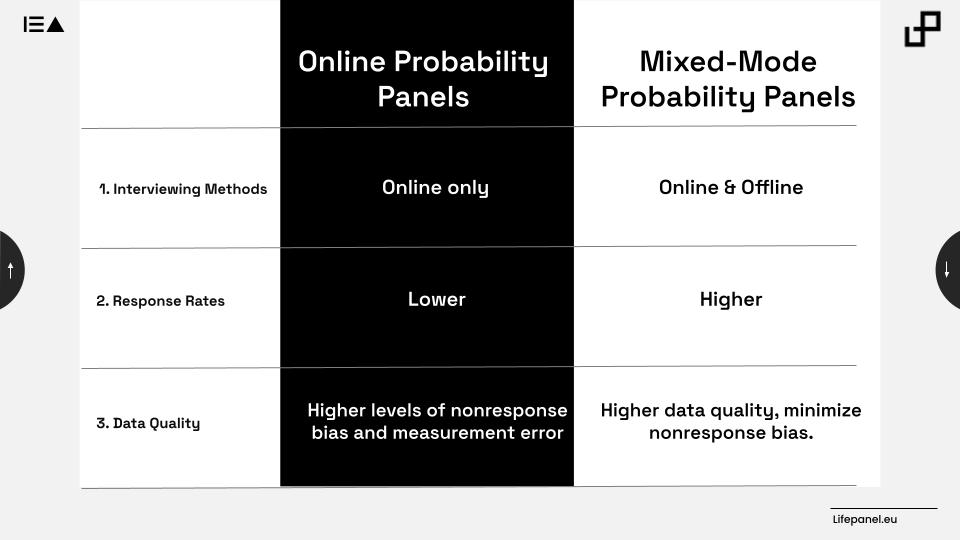
Interviewing methods
Another important difference is the mode of data collection. Online probability panels collect data through online surveys, while mixed-mode data collection in probability panels may offer respondents the option to complete the survey online or through other modes, such as phone through a telephone interview (computer-assisted-telephone-interview), sms, or mail.
Response rates
Response rates can also vary between online and mixed-mode probability panels. Online probability panels may have lower response rates compared to mixed-mode probability panels due to the ease of ignoring online invitations or surveys, while mixed-mode probability panels may have higher response rates due to the use of multiple modes and follow-up efforts.
Data Quality
Data quality is another important consideration. Online probability panels may have higher levels of nonresponse bias and measurement error compared to mixed-mode probability panels since mixed-mode probability panels can multiple modes and efforts to collect surveys which minimizes nonresponse bias. However from a recruitment perspective, both panels operate similar (full online probability panels exclude the non-online population however).
Key differences among Online Probability Panels and Mixed-Mode Probability Panels in terms of Interviewing Methods, Response Rates, and Data Quality.
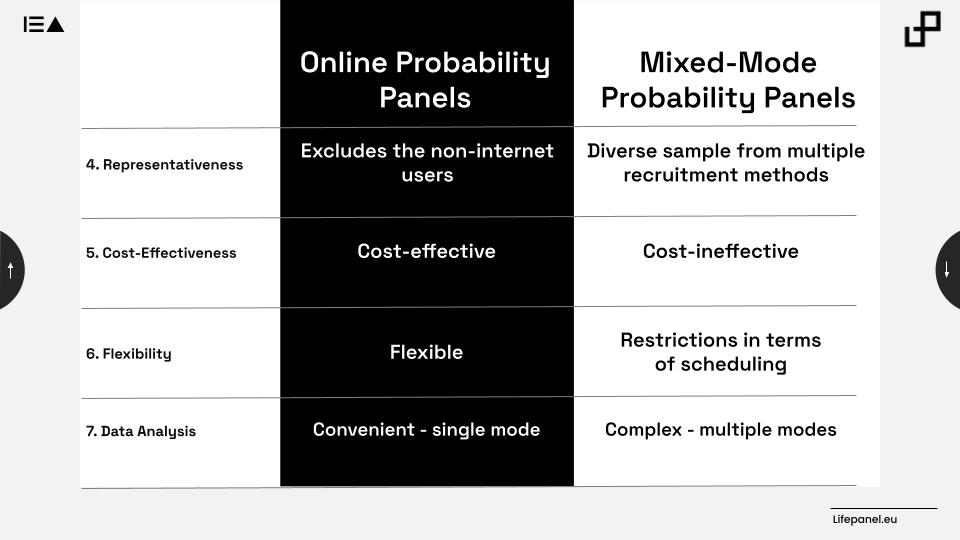
Sample Representativeness
Sample representativeness is another factor to consider when choosing between online and mixed-mode probability panels. Online probability panels may have limitations in terms of sample representativeness due excluding the non-internet users.
Cost-Effectiveness
Cost-effectiveness is also a factor to consider when choosing between online and mixed-mode probability panels. Online probability panels may be more cost-effective compared to mixed-mode probability panels due to the lower costs associated with online recruitment and data collection, while mixed-mode probability panels may require higher costs due to the use of multiple modes and follow-up efforts.
Flexibility
Flexibility is another advantage of online probability panels, as they offer more flexibility in terms of timing and convenience for participants. They can complete the survey at their own pace and from any location, while mixed-mode probability panels may have more restrictions in terms of scheduling and location due to the use of different modes.
Data analysis
Finally, data analysis may require different approaches depending on the type of probability panel used. Online probability panels may require different analytical approaches compared to mixed-mode probability panels due to potential differences in sample characteristics and data quality, which should be taken into account when interpreting the results.
Key differences among Online Probability Panels and Mixed-Mode Probability Panels in terms of Sample Representativeness, Cost-Effectiveness, Flexibility, and Data Analysis.
Conclusion
Overall, both online probability panels and mixed-mode probability panels have their advantages and disadvantages, and the choice between them should depend on the specific research goals, budget, and target population. It is important to carefully consider all factors before making a decision.
For projects that heavily rely on the opinions of older respondents or rural areas, it might be worth considering using a mixed-mode panel approach rather than a full online-probability approach.
About Lifepanel
While Lifepanel is a full probability-based online panel, we nevertheless provide the option for clients to include non-online respondents as well.
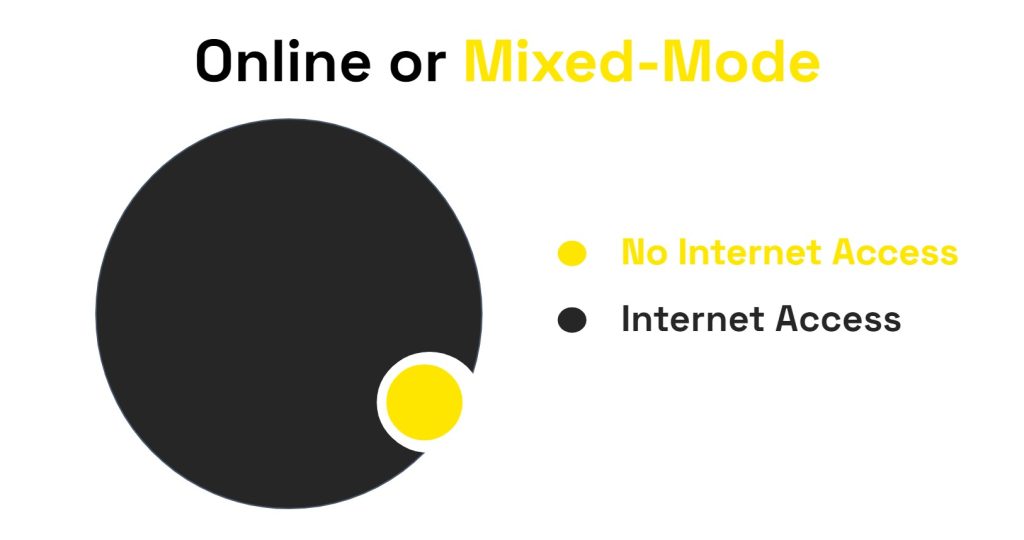
We can do that using two approaches: We can include recruited respondents that have mentioned not having internet access but would like to become part of the panels. These members are then called via CATI to make up between 5% and 10% of the survey.
The second option is to dial 10-15% using CATI from a fresh landline RDD sample. This ensures that clients receive a higher percentage of older people and respondents that are less likely to join a panel.
]]>Exploring Probability-Based Online Panels in Europe
https://lifepanel.eu/exploring-probability-based-online-panels-in-europe/
Tue, 06 Jun 2023 16:26:29 +0000https://lifepanel.eu/?p=227565Deprecated: preg_split(): Passing null to parameter #2 ($subject) of type string is deprecated in /var/www/lifepanel.eu/wp-includes/formatting.php on line 3501
]]>
Introduction to probability-based online panels
In recent years, there has been a growing interest in probability-based online panels as a means to gather accurate and reliable data for research purposes. These panels are designed to provide researchers with access to a diverse and representative sample of the population, ensuring that the findings are both valid and generalizable. In Europe, several such panels have been established, offering valuable insights into various aspects of society. This article aims to provide an overview of some of the most prominent probability-based online panels in Europe.
In contrast to the US where several country-wide panels have exists for over a decade, Europe has other challenges. The fact that address-based sampling is not available for all markets plus different demands for various markets makes it challenging to run a Europe-wide panel.
Using telephone sampling (dual-frame RDD) for probability-based panels
It is possible to join the panel only once a panelist has been invited based on a generated telephone number. While the recruitment survey does not require any internet access for the respondent, later survey participation however requires internet access if the survey is to be conducted online. As an alternative tablets or an actual call can be placed such that the probability-based internet panel also covers the offline population. It is then called a mixed-mode panel in social research.
Telephone surveys make use of a landline and mobile RDD sample and usually cover the population aged 16 / aged 18 years and older. One of the challenges with surveys conducted using an RDD sample is the nonresponse error due to a low response rate compared to face-to-face surveys. When the same research methods are applied for recruitment in survey panels it can still lead to a representative survey as long as the non-response is random.
Using Address-Based Sampling for a recruitment survey questionnaire for probability surveys
Another way to create a quality panel is using address-based sampling. In public opinion research, respondents are invited to join the panel via a letter that has an online link or QR code. Respondents can then complete the online questionnaire using web surveys to become a member of the probability panel.
1. The European Social Survey (ESS)
The European Social Survey is a biennial cross-national survey that measures public attitudes, beliefs, and behaviour patterns across Europe. Launched in 2001, the ESS uses rigorous probability sampling methods to ensure that its data is representative of the population. The survey covers a wide range of topics, including political engagement, social trust, well-being, and immigration attitudes. With data from over 30 countries, the ESS is one of the most comprehensive and reliable sources of information on social trends in Europe.
2. Understanding Society: The UK Household Longitudinal Study
Understanding Society is a large-scale longitudinal panel study that collects data from around 40,000 households in the United Kingdom. The study uses a probability-based sample design to ensure that its findings are representative of the UK population as a whole. By following the same individuals over time, Understanding Society provides valuable insights into how people’s lives change and evolve, covering areas such as health, employment, education, and family dynamics.
3. The German Internet Panel (GIP) for online panel surveys
The German Internet Panel is a probability-based online panel that has been collecting data on political, economic, and social attitudes in Germany since 2012. The GIP uses a two-stage sampling procedure to ensure representativeness and includes around 5,000 participants. By conducting regular surveys on a broad range of topics, the GIP provides valuable insights into public opinion and societal trends in Germany.
4. The Longitudinal Internet Studies for the Social Sciences (LISS) Panel
Based in the Netherlands, the LISS Panel is a probability-based online panel that has been active since 2007. With a sample of around 7,500 households, the LISS Panel covers a wide range of topics, including labor market dynamics, political attitudes, health, and social participation. The panel’s longitudinal design allows researchers to study changes in individual behavior and societal trends over time.
5. The French ELIPSS probability-based online Panel
The French ELIPSS Panel (Étude Longitudinale par Internet Pour les Sciences Sociales) is a probability-based online panel that has been collecting data on various aspects of French society since 2012. With a sample of around 3,000 individuals, the ELIPSS Panel focuses on topics such as political attitudes, social trust, well-being, and media consumption. By providing representative and reliable data on French society, the ELIPSS Panel offers valuable insights into the country’s social dynamics.
6. The Swedish NOVUS Panel for probability online research
Novus Sverigepanel (Novus) is a Swedish research company that specializes in public opinion polling. Founded in 1991, Novus has become one of the most trusted and respected polling firms in Sweden.
The company conducts a wide range of surveys on various topics, including politics, social issues, and consumer behaviour. Novus uses a combination of telephone and online surveys to gather data from a representative sample of the Swedish population.
One of the things that sets Novus apart from other polling firms is its commitment to transparency. The company publishes all of its survey results on its website, along with detailed information about its methodology and sampling techniques. This level of transparency helps to build trust with both clients and the general public.
Novus reports a total of 45.000 panel members and on top of that provides the option to sub-sample specific parts of the population.
7. PUBLIC Voice probability-based panel
Kantar Public is a leading research and consulting firm that specializes in providing insights into public opinion, behavior, and attitudes. One of the tools that they use to gather this information is the Public Voice Probability-Based Panel.
The Kantar PUBLIC Voice probability-based panel covers several countries in Europe and is expanding rapidly. For the recruitment, a mix of telephone (RDD based) and Address-based sampling is used.
As the world becomes more connected, the number of offline individuals is decreasing. Despite this trend, it’s important to note that the characteristics and behaviors of those who remain offline are unique. To ensure that these individuals are not left out of important research studies, PUBLIC Voice employs a blended, mixed-mode data collection approach. This approach allows the panel to reach not only offline populations but also other groups that are traditionally difficult to access. By using this method, Kantar PUBLIC can gather a more comprehensive understanding of the population and ensure that our findings are representative of everyone, not just those who are easily reachable.
8. The Ipsos Knowledge Panel in Europe
Ipsos has launched and will launch several probability-based panels in Europe after having operated the Knowledge Panel in the US for several decades.
Similar to the Kantar PUBLIC panel, Ipsos makes use of address-based sampling and CATI recruitment using RDD to recruit the panel
Other Probability-based panels by research centers in Europe
Several other research centers exist in Europe which are working on building probability-based panels. This article will constantly be updated.
Conclusion
Probability-based online panels play a crucial role in providing researchers with accurate and reliable data on various aspects of European society. By ensuring that their samples are representative of the population as a whole, these panels allow for valid and generalizable findings that can inform policy decisions and contribute to our understanding of social trends. As technology continues to advance and more people gain access to the internet, it is likely that we will see an increasing number of probability-based online panels emerge across Europe, offering new opportunities for research and discovery.
Introduction to probability-based online panels
In recent years, there has been a growing interest in probability-based online panels as a means to gather accurate and reliable data for research purposes. These panels are designed to provide researchers with access to a diverse and representative sample of the population, ensuring that the findings are both valid and generalizable. In Europe, several such panels have been established, offering valuable insights into various aspects of society. This article aims to provide an overview of some of the most prominent probability-based online panels in Europe.
In contrast to the US where several country-wide panels have exists for over a decade, Europe has other challenges. The fact that address-based sampling is not available for all markets plus different demands for various markets makes it challenging to run a Europe-wide panel.
Using telephone sampling (dual-frame RDD) for probability-based panels
]]>Unveiling the Core Quality Indicators for Online Probability Panels
https://lifepanel.eu/unveiling-the-core-quality-indicators-for-online-probability-panels/
Fri, 26 May 2023 07:51:01 +0000https://lifepanel.eu/?p=227524Deprecated: preg_split(): Passing null to parameter #2 ($subject) of type string is deprecated in /var/www/lifepanel.eu/wp-includes/formatting.php on line 3501
]]>
Online probability panels have emerged as a popular method for gathering robust data, as the demand for accurate and reliable high-quality survey research has soared among the academic research community. However, ensuring the quality of collected data from online probability panels is crucial for obtaining meaningful and valid research outcomes and results for social research.
So what are the key quality indicators for online probability panels? We are shedding light on the crucial factors that should be considered when evaluating the reliability and representativeness of online probability panels.
1. Recruitment and Representative sample:
The first quality indicator is the panel recruitment process and the sampling methodology. The panel should employ probability-based sampling techniques, such as random digit dialing probability sample (RDD sample) or address-based sampling, which guarantee a fair chance of selection for every individual in the target population. This avoids the self-selection biases which are predominantly present in access (non-probability) panels. Each panel member should be randomly selected from the full-frame size of the general population.
The demographic information collected to assess the composition of the panel is therefore compared to the target population made available – to ensure representative data of the probability panel.
Lifepanel uses the advantages of a full probability telephone sample (simple random sample) to invite potential respondents to join the panel where each individual of the population has an equal probability to be selected. They are recruited via SMS, CATI, or WhatsApp.
2. Panel members’ Profiling and Data Validation
Thorough panelist profiling and validation are essential for quality panel data. Profiling consists of collecting demographic and socio-economic data from respondents during the recruitment process but also each panel member should be often invited to edit or update their profile.
This helps to ensure that the panel remains representative of the target population over time. Inaccurate or outdated information can compromise the validity of research findings and lead to incorrect conclusions. Therefore, continuous efforts should be made to maintain accurate and up-to-date profiles, which can ultimately enhance the reliability and validity of panel data.
Having an external verification in place can detect and address inaccurate data provided by panel members when validating their profiles. Lifepanel uses double opt-in with two-factor authentication and phone verification during the registration process. Once confirmed via SMS or email, members can update their social demographics.
3. Transparency and Documentation
Probability-based panels must be transparent and should document their recruitment, maintenance, and data collection process, including panel recruitment sources, sampling frames, panelist incentives, response rates, and weighting procedures to address biases. This enhances the credibility and trustworthiness of the panel data.
If this is something you would like to dive into in more detail, we invite you to check Lifepanel’s ESOMAR 28 Questions & Answers on the Quality of Online Panels.
4. Data Quality Checks
To ensure accurate and reliable data, quality control measures like data cleaning and validation are used to identify issues such as duplicate responses, straight-lining, or speeding through surveys. The quality of data can be enhanced through the application of data validation methods such as consistency checks, detecting occurrences of duplicate or fraudulent responses, employing attention checks and validation questions, and employing quality assurance protocols to detect data that is inconsistent or may be unreliable.
5. Effective use of incentives
Incentives serve as powerful motivators for respondents to participate in surveys and provide accurate responses. By offering appealing incentives, such as monetary rewards, gift cards, or entry into prize draws, people are more likely to be engaged and committed to completing surveys promptly. By fostering a positive relationship with panelists, researchers can improve response rates and reduce attrition, ultimately leading to higher-quality data.
Consideration should be given to the timing and delivery of incentives to maximize their effectiveness. Offering incentives promptly after survey completion can reinforce positive behavior and incentivize future participation. Moreover, providing a variety of redemption options and convenient delivery methods (e.g., electronic vouchers) can enhance the appeal and accessibility of incentives, resulting in increased panelist satisfaction and engagement.
Finally, to enhance the quality of responses, it is essential to align incentives with the effort required from panelists. Longer or more complex surveys may warrant higher incentives to compensate for the additional time and cognitive effort required.
Incentives are often used to encourage people to complete surveys, but they can have a negative impact on the quality of responses. While incentives may seem like a good idea, they can actually lead to biased and unreliable data.
6. Coverage of the target population
There are limitations to their coverage, which can impact the accuracy and representativeness of the data collected.
One of the main limitations of online probability panels is that they rely on respondents having access to the internet. While Internet access has become more widespread in recent years, there are still many people who do not have access to the Internet or who have limited access.
In order to get coverage on the offline population as well, it makes sense to make use of mixed-mode panels rather than pure online-probability panels.
Another limitation is that online probability panels may not be able to reach certain segments of the population, such as those who are elderly or living in rural areas. These groups may be less likely to have (mobile or computer) internet access or may be less familiar with how to use online surveys, which can lead to underrepresentation in the sample.
7. Completion rate and panelists’ engagement in online surveys
High completion rates and engagement of panel members enhance research quality and effectiveness. By definition, completion rate is the percentage of members who complete the study, while engagement measures their active involvement, interest, and responsiveness.
To ensure a high completion rate, the survey design must be clear, concise, and engaging. Long and tedious questionnaires can discourage participants. Incentives like monetary rewards or gift cards can motivate participants to stay committed. Engaged participants provide accurate responses, leading to higher data quality. Lifepanel boosts engagement through regular communication, timely updates, acknowledgment, and fostering a sense of community.
Finally, utilizing user-friendly platforms and infrastructure can enhance the overall panel member experience, and increase engagement and positive attitude. Employing mobile-friendly designs, interactive elements, and multimedia content can make the panel more visually appealing and engaging for participants.
In conclusion, online probability panels provide a valuable means of collecting survey data, but it is important to ensure their quality. By taking into account the key indicators outlined in this blog post, researchers and survey practitioners can make informed decisions about whether online probability panels are suitable for their research goals. As technology advances and new challenges arise, ongoing evaluation and enhancement of quality indicators will be critical to preserving the credibility and dependability of online probability panels. This will allow researchers to draw precise conclusions and make well-informed decisions based on evidence.
About Lifepanel
Within Lifepanel we strive to achieve maximum transparency on how we ensure the quality of our panel. While our panel demographics are not always perfectly matching with our national representative weighting targets, we are upfront about it and provide information on panel demographics, demographics of invited panel members for a survey, demographics of the non-respondents and the demographics of the respondents together with the completion rate and full selection probability. On top of that, we outline the in-panel selection process which can have used a full random selection or the usage of propensity scores in order to reduce the Design effectiveness and thus increase the net effective sample size.
]]>How Fieldwork agencies can leverage the Lifepanel ID
https://lifepanel.eu/the-lifepanel-id/
Wed, 29 Mar 2023 05:08:20 +0000https://lifepanel.eu/?p=227365Deprecated: preg_split(): Passing null to parameter #2 ($subject) of type string is deprecated in /var/www/lifepanel.eu/wp-includes/formatting.php on line 3501
]]>
With Lifepanel we are supporting fieldwork agencies to transform from traditional probability-based data collection to mixed-mode online data collection which continues with the same methodological rigor and data quality compared to telephone data collection or face-to-face surveys. This blog article explains how fieldwork agencies can parse back respondents from partially completed interviews or fully completed interviews back to Lifepanel in a compliant way to reduce future fieldwork costs while at the same time increasing their data collection portfolio without adding additional overhead costs.
What is the Lifepanel ID?
Let us start with a very basic question: What is the Lifepanel ID that is now part of your Sample Solutions RDD sample deliveries? The Lifepanel ID is a unique identifier for any RDD mobile and landline number. Every mobile and landline number received a unique hash consisting of the country code and the hash. When we deliver an RDD sample record to a client, we also provide the hash value of the phone number.
Upon fieldwork completion, it is possible to parse back the Lifepanel ID to us for the completed and partially completed interviews.
The Lifepanel ID allows fieldwork partners to parse back the contact data of completed or partially completed interviews to us without compromising any PII as the actual number is not transmitted but only its hash. The Lifepanel ID can be returned back via our Survey Platform environment, secure FTP or a zipped password protected file.
The Lifepanel ID in practice
Now that we have created a basic understanding around the Lifepanel ID, let us take a look at how the Lifepanel works in practice for Fieldwork companies. Below are the five steps outlined that fieldwork agencies can use to increase the lifetime value of survey respondents for their data collection needs:
A fieldwork agency orders its RDD Sample from Sample Solutions which includes an extra column of Lifepanel ID and includes a unique hash for each phone number
The fieldwork is completed using the RDD sample
The hashes for partial completes and full completes are sent back to Lifepanel
Lifepanel invites the respondents to Lifepanel to become panel members and takes care of the entire invitation and incentive process.
The fieldwork agency is credited with a credit for an online-probability interview allowing the fieldwork agency to offer mixed mode probability interviews at higher margins compared to CATI only.
During the whole process, no PII is fed back to Lifepanel. The Sample Solutions database contains hashed numbers for each phone number so it can always track back the hash to the correct phone number. From a fieldwork agency perspective, there is no need to invest in the development or hosting of a panel which only adds additional overhead to fieldwork agencies – they can remain focused on their core capabilities while at the same time benefiting from this future-proof technology.
The Lifepanel marketplace model
The Lifepanel marketplace model is a win-win-win scenario for fieldwork agency, respondent and Lifepanel itself. The survey respondent benefits from the marketplace models that she or he now receives a specific remuneration each month in exchange for his views. He also only receives a maximum of one survey per month. The fieldwork agency benefits from the marketplace model in such a way that its recruitment efforts yield future respondents that the agency can re-use at a a decreased cost plus it has now access to probability-based online interviews to extend its service portfolio. Lifepanel benefits as well as it receives additional survey respondents from probability-based interviews from its partner at a fraction of the recruitment cost compared to standalone recruitment.
How to get started with the Lifepanel ID
As of 2023, any standard Sample Solutions RDD orders come with a Lifepanel ID. If not, you can request from Sample Solutions to get your existing sample enriched with the Lifepanel ID. Even if you have completed fieldwork in the past year, you are still able to parse back these respondents to us to start the recruitment process which helps you to build up your Lifepanel credits.
Curious about leveraging the Lifepanel ID in combination with your CATI call center? Feel free to submit your partnership request in the form above.
]]>Lifepanel adds Malta to its panel portfolio: Opinion poll on the right to abortion
https://lifepanel.eu/lifepanel-adds-malta-to-its-panel-portfolio-opinion-poll-findings-on-the-right-to-abortion/
Fri, 17 Mar 2023 14:06:27 +0000https://lifepanel.eu/?p=227345
In Late 2022, the small archipelago EU-member nation located in the heart of the Mediterranean held a parliamentary discussion for a bill to ease current abortion laws. As hearing the opinions and attitudes of the local population on the matter was deeply undercovered for EU standards, Lifepanel decided to launch a brief flash survey on the matter within its initial panel recruitment survey.
Lifepanel started its recruitment in Malta back in January 2023, in order to test its probability-based Random Digit Dialling (RDD) telephone recruitment modes. For mobile RDD: survey recruitment messages were delivered using SMS, and Whatsapp. And for the Landline portion of the Dual Frame Random Digit Dialling (DFRDD), a live-caller CATI interview was conducted.
The main benefit of using Lifepanel in Malta is the cost-effective and methodologically scientific way of conducting National Representative studies.
With relative feasibility for enabling survey research efforts in an otherwise often overlooked EU member state and serve as a positive indicator for utilisation of probability panels in the rest of the EU members that are not in the core EU19 trench.
On the other hand, one downside of the sampling approach is currently the under-representation of the older age group (50 to 64-year-olds and 65 and older) which would need to be sampled in an additional recruitment wave of landline RDD sample and CATI interviewing. By doing so the Design Effect can be reduced for actual surveys. We are looking forward to this modern approach of collecting the population’s opinions and monitoring the attitudes in longitudinal trend studies on key topics surrounding the country.
In the initial recruitment stage, Lifepanel engaged with the selected respondents on a 3 question flash survey to measure their opinions of the recent abortion bill in the National Assembly – which was the headline topic in December 2022: The results of the flash survey are as followed:
A small majority – 52.4% of residents in Malta disagree that all women should have the right to access abortion.
41.8% of residents strongly disagree all women should have the right to access abortion
–41.8% strongly disagree
–10.6% tend to disagree
–8.4% neither disagree nor agree
–13.7% tend to agree
–23.7% strongly agree
It should be noted that this impact concerns all age groups, all social categories, and all populations from all education levels and occupations; the differences observed are minor.
Furthermore, when asked, 72.1% of respondents expressed negative attitudes toward abortion.
43.1% of respondents believe abortion is morally wrong and should be illegal
29% of respondents are personally against abortion for themselves and family, however, they don’t believe the government should prevent a woman from making that decision for herself.
23.6% believe having an abortion is morally acceptable and should be legal
While 3.5% have expressed other concerns for the legality of abortion depending on whether the mother’s or baby’s life is at risk, termination of pregnancy within the first trimester of pregnancy or termination of pregnancy in situations of unlawful sexual intercourse (rape)
Finally, the survey also asked respondents regardless of their political views, whether they consider themselves religious, of which:
–70.1% consider themself religious
–29.9% consider themself non-religious
Furthermore, when cross-tabulated: Of the non-religious respondents: overall 63.7% agree that all women should have the right to an abortion, and 46.4% believe having an abortion is morally acceptable and legal.
On the other hand, of the religious respondents: 62.6% disagree that all women should have the right to an abortion, 52.5% believe having an abortion is morally wrong and should be illegal at the same time 29.3% are personally against abortion for themself and their family but don’t believe government should prevent a woman from making that decision for herself.
According to a survey carried out by Lifepanel on a representative sample of 2,033 eligible respondents selected using a Dual RDD frame for a mixed mode push-to-web and CATI survey mode, between the 12th of January and 3rd March 2023.
All surveys are subject to sampling error, which is the expected probable difference between interviewing everyone in a population versus a scientific sampling drawn from that population. Sampling error should be adjusted to recognize the effect of weighting the data to better match the population. In this poll, the simple sampling error for over 2000 respondents is +/- ±2.1 percentage points, at a 95 percent confidence interval.
For a better overview of the Panel composition and demographics covered for Malta, please visit the country panel page for Malta: https://lifepanel.eu/malta/
For more information: hello@lifepanel.eu
About Lifepanel
Lifepanel provides the next generation of probability based-data collection allowing researchers and policymakers to base their decision on reliable and scientifically reliable data.
The current coverage of Lifepanel consists of Germany, Malta, and North Macedonia. For inquiries to run your own survey for one of the countries, please reach out via hello@lifepanel.eu.
Lifepanel is further expanding its reach with the addition of new countries where we partner up with local fieldwork agencies. If you are a fieldwork agency and interested in getting to know how Lifepanel can further help you in growing a probability-based panel, please take a glance at our article: https://lifepanel.eu/lifepanel-for-cati-fieldwork-agencies/
]]>Lifepanel launches in the Western Balkans
https://lifepanel.eu/lifepanel-launches-in-the-western-balkans/
Thu, 16 Feb 2023 03:11:21 +0000https://lifepanel.eu/?p=227205
The First Probability Survey Panel in North Macedonia
Lifepanel started its pilot recruitment in North Macedonia back in the summer of 2022, in order to test its probability-based RDD telephone recruitment modes: SMS, Whatsapp, and CATI.
The overall benefits of launching Lifepanel in North Macedonia prove to be a cost-effective and methodologically scientific way with relative feasibility for enabling survey research efforts in an otherwise under-researched region and serve as a positive indicator for utilisation of probability panels in the rest of neighboring countries as part of this overlooked part of Europe.
A downside of the approach is currently the under-representation of the older age group (65 and older) which will be sampled in an additional recruitment wave using landline sample and CATI. By doing so the Design Effect can be reduced for actual surveys.
We are looking forward to this new approach of collecting the population’s opinions and monitoring the attitudes in longitudinal trend studies on key topics surrounding the country and the broader Balkan region.
In the initial recruitment stage, Lifepanel engaged with the selected respondents on a 3 question flash survey to measure their opinions of the post-pandemic inflation and thoughts on whether the authorities should impose measures to combat the rising prices of basic household goods:
The results are as followed:
95.5% of residents in N. Macedonia perceive prices of domestic goods to be high for current standards.
70% of residents consider that their budget has been affected enormously by the price hikes in basic food products
– 70.0% strongly impacted
– 25.5% moderately impacted
– 3.2% slightly impacted
– 1.3% not at all affected
Respondents’ perception on the current prices
It should be noted that this impact concerns all age groups, all social categories, all ethnicities, and all regions (each impacted by more than 87%); the differences observed are minor.
A very large majority of respondents perceive the economic situation as worrisome: 88.8%. While only 4.2% are not at all worried about the overall direction the economy is headed and 7% share a neutral stance This evolution is also very present in all layers of the population.
Respondents’ perception on the nation’s economic situation
Finally, the survey also reveals the opinions on whether the government authorities should step in to limit the price increase:
– 91.7% believe the government should intervene with a price freeze on basic domestic products
– 8.3% believe it should not intervene
Respondents’ opinion on whether a price freeze intervention is necessary by the authorities
According to a survey carried out by Lifepanel on a representative sample of 751 eligible respondents selected using a Mobile RDD frame for a mixed mode push-to-web and CATI survey mode, between 4th and 14th February 2023.
All surveys are subject to sampling error, which is the expected probable difference between interviewing everyone in a population versus a scientific sampling drawn from that population. Sampling error should be adjusted to recognize the effect of weighting the data to better match the population. In this poll, the simple sampling error for 751 respondents is +/-±3.58 percentage points, at a 95 percent confidence interval.
Lifepanel provides the next generation of probability based-data collection allowing researchers and policymakers to base their decision on reliable and scientifically reliable data.
The current coverage of Lifepanel consists of Germany, Malta, and North Macedonia. For enquiries to run your own survey for one of the countries, please reach out via hello@lifepanel.eu.
Lifepanel is further expanding its reach with the addition of new countries where we partner up with local fieldwork agencies. If you are a fieldwork agency and interested in getting to know how Lifepanel can further help you in growing a probability-based panel, please take a glance at our article: https://lifepanel.eu/lifepanel-for-cati-fieldwork-agencies/
]]>Exploring the Benefits and Challenges of Online Probability Panel and Access Panel Sampling for Survey Data Collection
https://lifepanel.eu/benefits-of-probability-panels/
Tue, 31 Jan 2023 07:49:20 +0000https://lifepanel.eu/?p=227148
With Lifepanel we often get the question what are the key points that make a probability panel unique compared to a common access panel. In this blog article, we will take a glance at the pros and cons of probability panels and access panels.
Gathering reliable survey data is essential for the success of any research project. As technology progresses and the internet becomes increasingly accessible, online survey data collection presents a novel and innovative way to collect survey data. In this article, we will be exploring the benefits and challenges of online probability panel and access panel sampling for survey data collection.
Probability panel and access panel sampling are two increasingly popular methods of collecting survey data online. Probability panels are composed of a large, randomly selected group of individuals who have agreed to participate in research studies.
Some aspects to consider for Lifepanel
Access panels, on the other hand, are self-selected groups of people who have signed up to take part in various surveys.
We will discuss the advantages and drawbacks of both methods to guide you in the decision-making process when it comes to collecting survey data online. We will also provide you with actionable tips and strategies to ensure you are able to maximize the benefits of online probability panel and access panel sampling for your survey data collection.
Our comprehensive guide will provide you with the knowledge you need to understand how online probability panel and access panel sampling can be used effectively for survey data collection. We hope you will join us in our exploration of the benefits and challenges of online probability panel and access panel sampling for survey data collection.
Definition
Probability Panel Sampling
Probability panels are composed of a large, randomly selected group of individuals chosen from a target population. This population is usually obtained from government censuses, national registers, and other sources. The probability panel provides a reasonable level of representativeness and can also be used to estimate population characteristics with confidence. From a technical perspective, probability panel sampling is based on the notion of sampling from a defined population with known characteristics and can provide accurate and reliable data for use in surveys and research.
Access Panel Sampling
Access panel sampling, on the other hand, involves the use of a pre-existing panel of individuals who have agreed to participate in surveys. Access panel samples are typically recruited by a panel provider and are often incentivised for their participation. These participants are not randomly selected, which can potentially lead to non-representative samples. Additionally, access panel samples may not be as representative as those provided by probability panels, due to the recruitment process used by the panel provider.
Overall, probability panel sampling is the most reliable method of collecting survey data online. It provides a representative sample and can provide accurate estimates of population characteristics. Access panel sampling is a possible option, however, it tends to be less reliable due to the non-random recruitment process. Ultimately, the decision of which sampling method to use should be made on a case-by-case basis, depending on the specific research needs.
Using Probability Panel and Access Panel Sampling for Survey Data Collection
Probability panel sampling is a type of online survey data collection that uses a large, randomly selected group of individuals to represent the general population. This method is typically used for high-precision and nationwide research studies and requires a significant time commitment from the panelists. By randomly selecting participants from the population, researchers can obtain valid results with high levels of accuracy. Furthermore, the use of probability sampling ensures that the entire population is represented, allowing for more valid and reliable results.
In contrast to probability panel sampling, access panel sampling is a less rigorous method of data collection. This type of sampling involves recruiting participants from a pre-existing list of individuals who have already agreed to participate in surveys and research projects. Access panels are often used when time or budget constraints make it difficult to use probability panel sampling. However, access panel sampling is not as representative of the population as probability panel sampling, so it is not as reliable or accurate compared to probability panel sampling.
Overall, both probability panel and access panel sampling can be used to collect reliable survey data. While probability panel sampling is more precise and accurate than access panel sampling, it is also more time-consuming and expensive. On the other hand, access panel sampling is more cost-effective and requires less time but is also less precise and accurate than probability panel sampling. As a result, it is important to consider the pros and cons of each method to determine which online survey data collection method is best for a particular research project.
Considerations for Selecting Probability Panel and Access Panel Sampling
Probability panel sampling is an increasingly popular method of gathering survey data online, as it offers the advantage of being able to access a large, randomly-selected sample of individuals. This sampling technique is especially useful for collecting data from geographically dispersed populations or populations that are otherwise difficult to access. Moreover, probability panel sampling offers the advantage of having greater control over the selection of survey respondents, as the researcher can specify criteria for inclusion such as age, gender, and other demographics.
Access panel sampling is also a popular approach to survey data collection, particularly when the researcher is interested in collecting data from specific subsets of the population. Unlike probability panel sampling, access panel samples are typically composed of individuals who have already agreed to be part of the panel, such as through offers of incentives or rewards. This approach can be advantageous as it allows the researcher to access data from more targeted groups, such as members of a specific profession or people living in a certain region. Additionally, access panel sampling allows for greater control over the selection of survey respondents, as the researcher can specify criteria for inclusion such as age, gender, and other demographics. However, access panel sampling can also be more expensive than probability panel sampling, as higher incentives are often needed to encourage specific audiences of respondents to take part in complex surveys.
Ultimately, the decision to use probability panel sampling or access panel sampling depends on the research goals, the target population, the budget, and other considerations. In some cases, a combination of both methods may be required for the most effective data collection.
Sample Size, Data Quality, and Cost
Probability panel sampling is advantageous because it is a relatively cost-effective solution for collecting survey data compared to traditional Telephone (CATI) interviews. Since probability panels are randomly selected, they are more representative of the population being surveyed. This reduces selection bias and increases the accuracy of the survey data collected. Furthermore, the use of probability panels can yield a large sample size while also maintaining data quality. Additionally, probability panel sampling allows for more accurate long-term tracking of respondents. When comparing probability interviews with generic access panel interviews, probability panels will be more expensive.
Access panel sampling is an efficient and cost-effective method of collecting survey data. Access panels are composed of individuals who have agreed to participate in surveys and have completed profile information. Surveys conducted using an access panel are often quicker to complete due to the fact that respondents are already familiar with the survey process. Additionally, access panels can help reduce costs associated with survey data collection since they are already pre-screened. However, access panel sampling is not as reliable as probability panel sampling since there is potential for selection bias and the sample size is usually smaller than that of a probability panel.
Constraints of Probability Panel and Access Panel Sampling
Probability panel sampling is an increasingly popular online survey data collection method, based on the principles of probability sampling. Probability panel sampling provides a wide range of benefits, the main one being that it yields a representative sample of the population. This is because participants are randomly selected, creating a sample that matches the population’s demographic characteristics. Additionally, probability panel sampling can be used to collect data from geographically dispersed individuals.
On the other hand, access panel sampling is a form of non-probability sampling that is used to conduct online surveys. Access panel surveys are cost-effective and can be completed quickly, but they are generally regarded as less reliable than probability panel surveys. This is because access panel participants are not randomly selected and the panel is not necessarily representative of the population as a whole. Additionally, access panels often contain individuals who have a vested interest in the outcome of the survey, potentially biasing the results.
Overall, both probability panel and access panel sampling have their own advantages and disadvantages. Probability panel surveys provide a representative sample of the population, but they can be more expensive and time-consuming to conduct. Access panel surveys are cheaper and can be conducted quickly, but the sample may not be representative and the results could be biased. Ultimately, the choice of which method to use depends on the research goals and budget.
Overview of Probability Panel Sampling
Probability panel sampling is a popular method of collecting survey data online. This method uses a randomly selected group of individuals to represent a larger population. These individuals are recruited and then retained in a panel to participate in multiple surveys over a period of time. This method of sampling is highly reliable as it increases the likelihood that the sample is statistically representative of the population from which it is drawn. Advantages of probability panel sampling include the ability to quickly collect large amounts of data, access to a large and diverse sample of participants, and the ability to repeatedly ask the same questions to measure how attitudes and opinions may change over time.
In contrast, access panels are composed of a pre-existing group of individuals who have agreed to participate in online surveys. This method of sampling is less reliable as the sample may not be representative of the larger population it is supposed to represent. Additionally, access panels may be subject to more bias than probability panel sampling as the group of participants may not be randomly selected. However, access panels offer a variety of advantages such as the ability to quickly collect large amounts of data, access to a large and diverse sample of participants, and the ability to tailor surveys to specific groups of people.
Overall, probability panel sampling and access panels offer advantages and disadvantages when it comes to collecting survey data online. While probability panel sampling is more reliable in terms of representing a larger population, access panels may be beneficial in terms of speed, access to a diverse sample of participants, and the ability to tailor surveys to specific groups of people. Thus, it is important to carefully consider the pros and cons of each method prior to selecting a sampling method for survey data collection.
Overview of Access Panel Sampling
Probability panel sampling is a method of surveying that involves the selection of a large, randomly chosen sample of individuals from a population. This method of sampling is based on the idea that each individual in the population has an equal chance of being selected for the sample. This method of survey data collection has numerous advantages, such as its ability to produce unbiased results, its cost-effectiveness, and its ease of use. However, it is also prone to some potential biases, such as non-response bias, sample attrition, and coverage error.
Access panel sampling, on the other hand, is a survey data collection method that relies on the selection of predetermined groups of individuals from the population. The selection of individuals for these groups is done through the use of a predetermined questionnaire. This method of sampling is often more cost-effective and time-efficient than probability panel sampling, but it is also more prone to bias. Thus, it is important to consider the pros and cons of each method before using either method for survey data collection.
Benefits of Probability Panel Sampling
Probability panel sampling is an increasingly popular method of collecting survey data online. This method of sampling allows researchers to obtain data from a random sample of individuals who are representative of the population of interest. This ensures that the data collected is reliable and valid and reflects the opinions of the general population. In the case of Lifepanel, the sampling frame is a dual-frame Random Digit Dialing (RDD) sample for most countries considering that phone penetration is close to 100% for most European countries.
RDD Dual Frame for probability selection
The numbers are then all called via CATI call centre agents. Additionally, WhatsApp and SMS messages are just for reminders or post-stratification.
One of the main benefits of probability panel sampling is that it is cost-effective. As the sample size is large, the cost per survey is much lower than many other survey data collection methods. Additionally, probability panel sampling is well-suited for measuring the opinions of a population over time as the same individuals are used for each survey, allowing for trend analysis.
Another advantage of probability panel sampling is that it allows for better control of the sample size. Researchers can specify the sample size they need and the panel provider can provide that exact number of participants. This helps ensure that the data collected is representative and reliable.
Overall, probability panel sampling is an efficient and cost-effective way to collect survey data online. It also provides researchers with reliable data that is representative of the population of interest.
Benefits of Access Panel Sampling
The major benefit of access panel sampling is that the panel of participants is already established and can be used to target specific demographic groups. This allows for the survey data collection to be more efficient and eliminates the need for costly sampling techniques. Additionally, access panel sampling allows for the collection of data from a large number of individuals from different geographic locations. This allows for surveys to be conducted on a global scale, which provides greater insight into the opinions and experiences of individuals from different countries and cultures. Another benefit of access panel sampling is that the data collection process can be relatively fast, as the panel of participants is already established. This allows for the data to be collected more quickly and accurately than other methods of survey data collection. Finally, access panel sampling allows for the data to be analyzed more easily since the panel is already established and the data is collected in a uniform manner.
Challenges of Probability Panel Sampling
Probability panel sampling is a data collection technique that is becoming more popular as technology advances and the internet becomes more accessible. It is a form of online survey data collection where a random sample of people is selected from a larger population such as a Dual-Frame RDD sample or an ABS frame, and invited to participate in a survey. This method of survey data collection has some advantages, such as being able to collect data from a larger, more diverse population than is typically available from an online sourced survey (eg. Social media). Furthermore, it allows for surveying those without access to computers or the internet, as surveys can also be sent to the mobile phone or the respondent can be called.
However, there are some challenges associated with using probability panel sampling for survey data collection. For example, the random selection process is only as effective as the demographic information available in the population being sampled. This means that if the population is not adequately represented, the sample may not be representative of the population being surveyed. As probability panels do not apply any quotas, post-stratification might be required as often there is a bias towards younger audiences, more male and higher educated (when phone recruited).
Population Skews are possible in Probability Panels
Additionally, there may be a lack of control over who responds to the survey, as there is no guarantee that the sample will be representative of those who are invited to participate. Finally, because of the large size of these panels, it may be difficult to ensure that all members of the sample actively participate in the survey. In order to ensure that the data collected is representative and reliable, it is important to ensure that the sample is properly addressed and incentives are provided to encourage full participation.
Challenges of Access Panel Sampling
Access panel sampling is a relatively new form of survey data collection that relies on a smaller population of individuals who are pre-selected to participate in an online survey. While access panel sampling presents several advantages for survey data collection, such as the ability to select a specific demographic or target specific individuals, it also presents several unique challenges.
One of the primary challenges of access panel sampling is the potential for bias. Access panel sampling requires a pre-selected group of individuals to participate in the survey, which presents the potential for bias in the results. For example, the individuals who are chosen to participate in the survey may not be representative of the larger population of interest, leading to skewed results. Additionally, access panel sampling relies on the individuals to self-report, which can lead to further bias due to the potential for inaccurate or incomplete responses.
Another challenge presented by access panel sampling is the potential for low response rates. As access panel members are pre-selected for the survey, they may not be as motivated to participate in the survey as members of a randomly selected probability panel. As such, access panel sampling typically has lower response rates than probability panels, reducing the accuracy of the data collected.
Finally, access panel sampling can be limited by the availability of qualified respondents. Access panel sampling relies on pre-selected individuals to participate in the survey, and there can be limited availability of individuals who meet the target criteria for the survey. This can restrict the scope of the survey and limit the data that can be collected.
Comparing Probability Panel Sampling to Other Online Sampling Methods
Probability panel sampling involves randomly selecting a large group of individuals from a target population, who are then invited to participate in an online survey. This method is advantageous as it eliminates the need to contact potential survey respondents individually and encourages a more representative sample of the target population. Additionally, probability panel sampling allows researchers to quickly and accurately collect large amounts of data in a short period of time.
On the other hand, access panel sampling relies on a group of pre-recruited individuals who are willing to take surveys. This method is beneficial as it does not require researchers to recruit potential survey respondents and the sample size can be easily adjusted. Additionally, access panel sampling is faster and cheaper than probability panel sampling, as participants are already pre-recruited and can be contacted quickly.
Comparison Access Panel vs. Probability Panel
Overall, both probability panel sampling and access panel sampling are viable methods of collecting survey data online. While probability panel sampling is advantageous as it eliminates the need to contact potential survey respondents individually and encourages a more representative sample of the target population, access panel sampling is beneficial as it is faster and cheaper and does not require researchers to recruit potential survey respondents. Ultimately, the choice of which online sampling method to use depends on the specific needs of the research project.
Key Takeaways for Exploring Online Probability Panel and Access Panel Sampling
The primary benefit of probability panels is that they are representative of the entire population. This means that as long as they are carefully selected and balanced, they can be used to draw reliable conclusions about the population as a whole. The primary challenge of probability panels is that they can be quite expensive to build and often require a long time to recruit a large enough sample size.
Access panels are composed of a much smaller group of people who are recruited through advertising or other methods. While this type of sampling is much less expensive, it is also much less reliable, as it is not entirely representative of the population. The challenge with access panels is that it can be difficult to identify and factor out any biases that may exist in the sample that could potentially skew the results.
In conclusion, both probability panels and access panels provide an inexpensive and efficient way to collect survey data online. While probability panel sampling is more reliable, it is also more expensive, while access panel sampling is less expensive but less reliable. Ultimately, the choice of sampling method depends on the research goals and the available budget.